AUR JOURNAL · HISTORY: JULY 10-11, 2025
When the bot started looking like a system
A few days earlier, the big question was whether the bot could simply keep running. By July 10 and 11, the screen was busier. More markets were being watched. Most of them said nothing. Then one simulated order appeared.
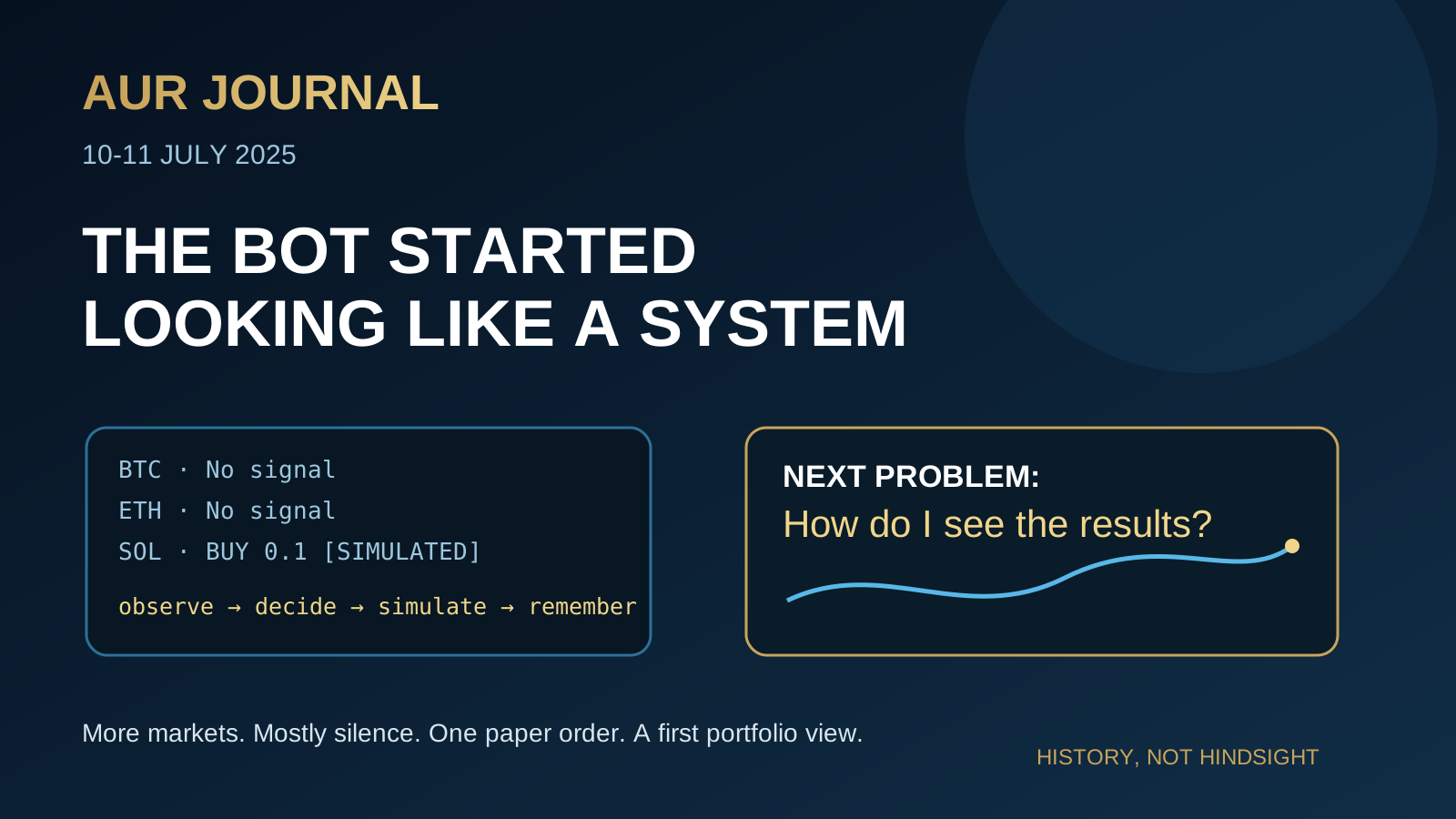
More markets did not mean more answers
Patryk was still building without a quant team and without a formal programming background. Roj, the AI partner beside him, was still part teacher, part code generator and part debugger. The project was growing faster than Patryk's technical vocabulary.
On July 10 the bot was checking several crypto markets. The logs repeatedly returned No signal. A signal is simply a rule saying that current market conditions justify an action. In everyday terms, the bot kept looking around and deciding that there was nothing to do.
That silence mattered. Adding more symbols made the machine look more serious, but it did not magically create opportunities. The system could be active while producing almost no decisions.
Then a paper order appeared
On July 11 the preserved history records a simulated BUY order for SOL, size 0.1. Paper trading means pretending to place a trade without risking real money. It lets you test whether the machinery behaves as expected before trusting it with capital.
This was not proof that the strategy worked. It was a different kind of progress: a decision could now travel further through the machine. The bot was no longer only reading prices and printing messages. It was beginning to connect signals, simulated execution and portfolio state.
The next problem was visibility
As more pieces appeared, Patryk wanted something much simpler than another terminal window: a basic web page where he could see the results.
That wish says a lot about the stage the project had reached. A single script can be watched line by line. A growing system needs a place where a human can quickly understand what it is doing.
Roj was changing too. The AI was still capable of mistakes, and Patryk was still learning how to ask for help, test the answer and come back with the next failure. But their work was slowly moving from isolated code generation toward something more structured: observe, decide, simulate, remember, show the result.
A machine can grow before its strategy matures
By the end of this small chapter, AUR still did not exist in its later form. There was no reason to pretend otherwise. What existed was an increasingly complicated trading bot and a human learning, one command and one failure at a time, how to keep it under control.
The next verified entries would make the tension sharper. The machinery could run, but long periods of silence and execution trouble were beginning to raise a more uncomfortable question: what if the problem was not only the code?
AUR Research Lab documents research and development. Nothing here is investment advice, a promise of returns, or evidence of a validated trading edge.