
Historical note: this entry is reconstructed from verified Gemini archive anchors from June 10, 2025. Sensitive infrastructure details are intentionally omitted.
The idea needed a description other programmers could understand
On the evening of June 10, the project asked for a detailed explanation of the whole idea, written as if it were being presented to other programmers. That request marked a change. The work was no longer just a chain of small coding questions. It needed a shared description of what was being built.
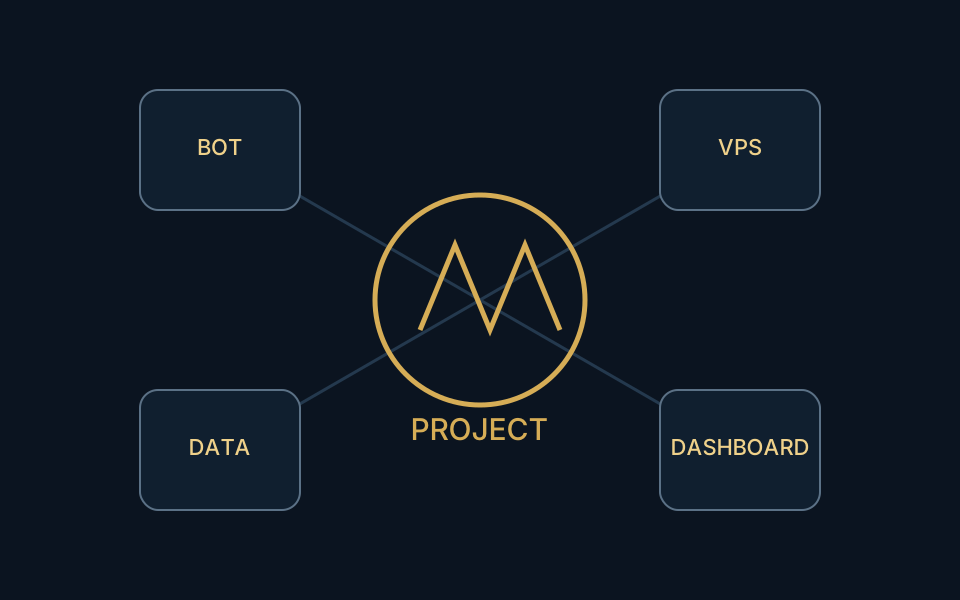
The concept was still a self-learning crypto trading bot, but the surrounding system was becoming clearer too. A web dashboard and operation on a VPS were part of the picture. The project was starting to look like a product rather than a single script.
Do not freeze every trading decision
A few minutes later, the project pushed back against rigid rules for stop loss, take profit and similar decisions. The expectation was that the bot should learn and adapt instead of receiving one permanent set of numbers.
That expectation was much more ambitious than the code could justify at the time. There was still no mature learning protocol. Historically, however, it shows what the project wanted to become: not a fixed indicator script, but a system that could change its decisions as market conditions changed.
The project got a name
At 20:31, a detailed project description appeared under the name Pierwszy milion dolarów, which means "First million dollars". The name captured the optimism of that stage better than any polished retrospective could.
It was an intentionally ambitious name, not evidence that the system could achieve that result. At this point the project was still early, fragile and full of assumptions that had not been tested properly.
The ambition had become large enough that the bot was no longer just a bot. It was becoming a project with a name, a system around it and a story about what AI might make possible.
There was another experiment hidden inside the trading experiment
At 20:36, the project stated something that would remain important for its history: this was also a test of whether a person without programming knowledge could build a complex software system with AI.
That made the project two experiments at once. One question was whether the trading system could eventually work. The other was whether AI could act as enough of a technical partner for a non-programmer to build and operate it.
What came next
The next days would push the project toward futures trading, more automated decisions and strategy optimisation. They would also produce an early negative backtest that made the easy-profit story harder to maintain.
AUR remains a research project. Historical entries document its development; they are not investment advice or a promise of returns.