Historical note: this entry is reconstructed from the preserved Gemini archive. Verified anchors come from June 8, 2025.
Check it from a phone
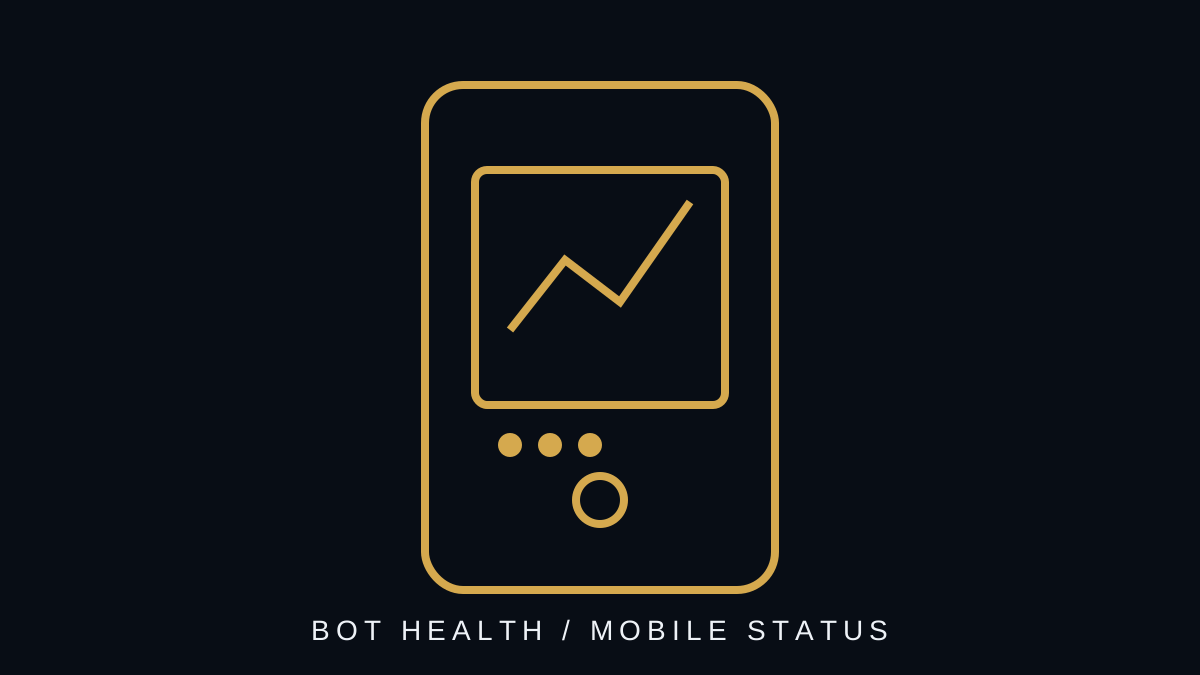
Just after midnight, the project asked for a way to monitor the bot from a phone and see whether everything was working. That was a small but important change in thinking. A trading bot was no longer only code running somewhere. It was becoming a system that needed to be observed.
The most important dashboard item
Later that day the requirement became clearer. The dashboard needed a simple health status showing whether the bot was running, frozen or stopped.
That sounds obvious now, but it exposed a basic operational truth. An automated system can fail without producing a dramatic error on screen. A process can stop, freeze or lose a connection while the person responsible for it is somewhere else.
From intelligence to observability
The early project was still far from a reliable autonomous trading system. Yet this was one of the first moments where observability became part of the design. The question was not only what decision the bot makes, but whether the system itself is healthy enough to make any decision at all.
If a bot is meant to run without constant supervision, its condition has to be visible.
A dashboard is not proof
A green status light does not prove that a trading strategy works. It only says something about operation. Scientific validity, market edge and system health are different problems, and they need different checks.
On June 8, that distinction was not yet formal. The useful step was simpler: the project started treating monitoring as part of the product rather than an optional extra.
What came next
By June 10 the project would receive a larger identity, with a self-learning trading bot, VPS operation, historical market data and a deliberately ambitious goal gathered into one named project.
AUR remains a research project. Historical entries document its development; they are not investment advice or a promise of returns.