
Historical note: this chapter is based on a verified Gemini archive anchor from June 25, 2025. Credentials, server details and sensitive implementation information are omitted.
The Bybit era appears
By June 25, preserved history shows a project named around a Bybit AI bot and a separate trade execution component. That sounds like a small technical detail, but it marked a real change in what the project was trying to solve.
Earlier work had focused heavily on market data, indicators, backtests and the question of whether the bot could make its own decisions. Now another problem was becoming just as important: what happens after a decision exists?
A signal is not a trade
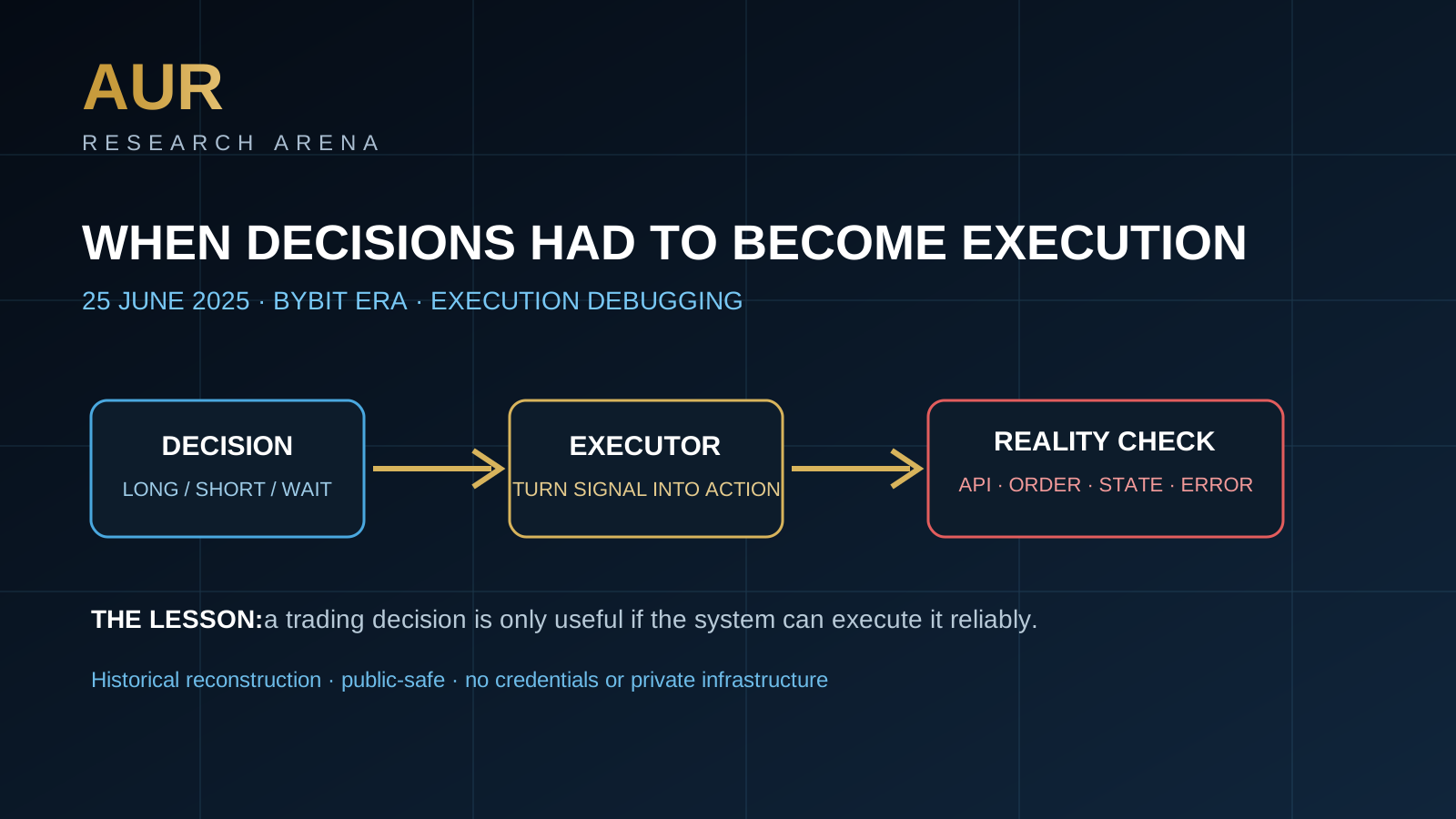
An old moving-average and RSI decision engine could produce a SHORT decision. But a decision written by software is still only information. To become an actual order, another part of the system has to interpret it, communicate correctly with the exchange and handle everything that can go wrong along the way.
This is where operational debugging grew in importance. The project was no longer debugging only formulas or strategy logic. It was debugging the path between an internal decision and exchange execution.
Another layer of complexity
That path introduced a different class of questions. Did the execution component receive the right decision? Did the connector understand the request? Did the system know what happened after it sent the request? Could an error leave the bot believing something different from the exchange?
The preserved history does not justify pretending that these problems were already solved. It shows the opposite: execution was becoming a larger part of the work precisely because reliable trading software needs more than a strategy.
The project was becoming a system
Looking back, June 25 is useful because it captures a transition. The early idea had started with market analysis and learning. Then came backtesting, modular code and repeated dependency failures. Now decisions, execution and operational state were beginning to connect.
There was still a long distance between this early bot and the later AUR research system. At this point the project was learning a simpler lesson: a trading bot is not just the part that decides. It is also the machinery that turns a decision into a controlled action and can explain what happened when that action fails.
AUR is a research project. Historical posts are not investment advice and do not promise future returns.